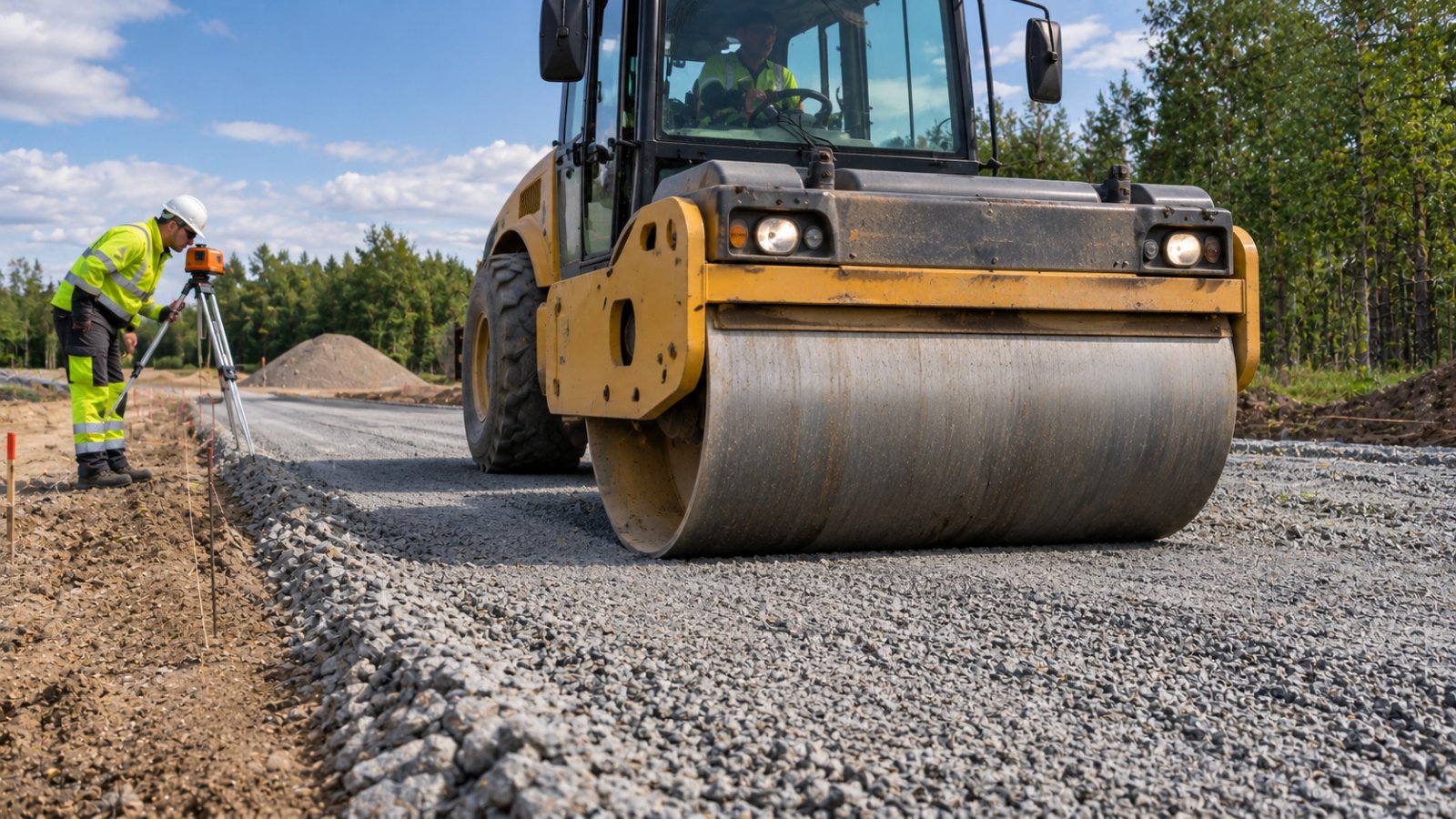
An overview of how roads in Western Estonia are planned, built and surfaced, from the first excavation to the final layer of asphalt.
LÄÄNE-EESTI TEEDEEHITUS OÜ was registered in 2017 and is based in Haapsalu, Lääne County. The company's field of work is the construction of roads and the work that comes with it: preparing the ground, building the road base and laying asphalt.
This site explains these types of work in plain terms. It describes what happens at each stage of a road project and which words are commonly used on a construction site.

A road is a set of layers. At the bottom is the subgrade, the natural or improved soil. On top of it are the sub-base and base layers, usually sand, gravel or crushed stone. The asphalt surface comes last.
Each layer is spread evenly and compacted with rollers. The level and slope are checked with measuring equipment, so that water runs off the surface and the road keeps its shape under traffic and frost.
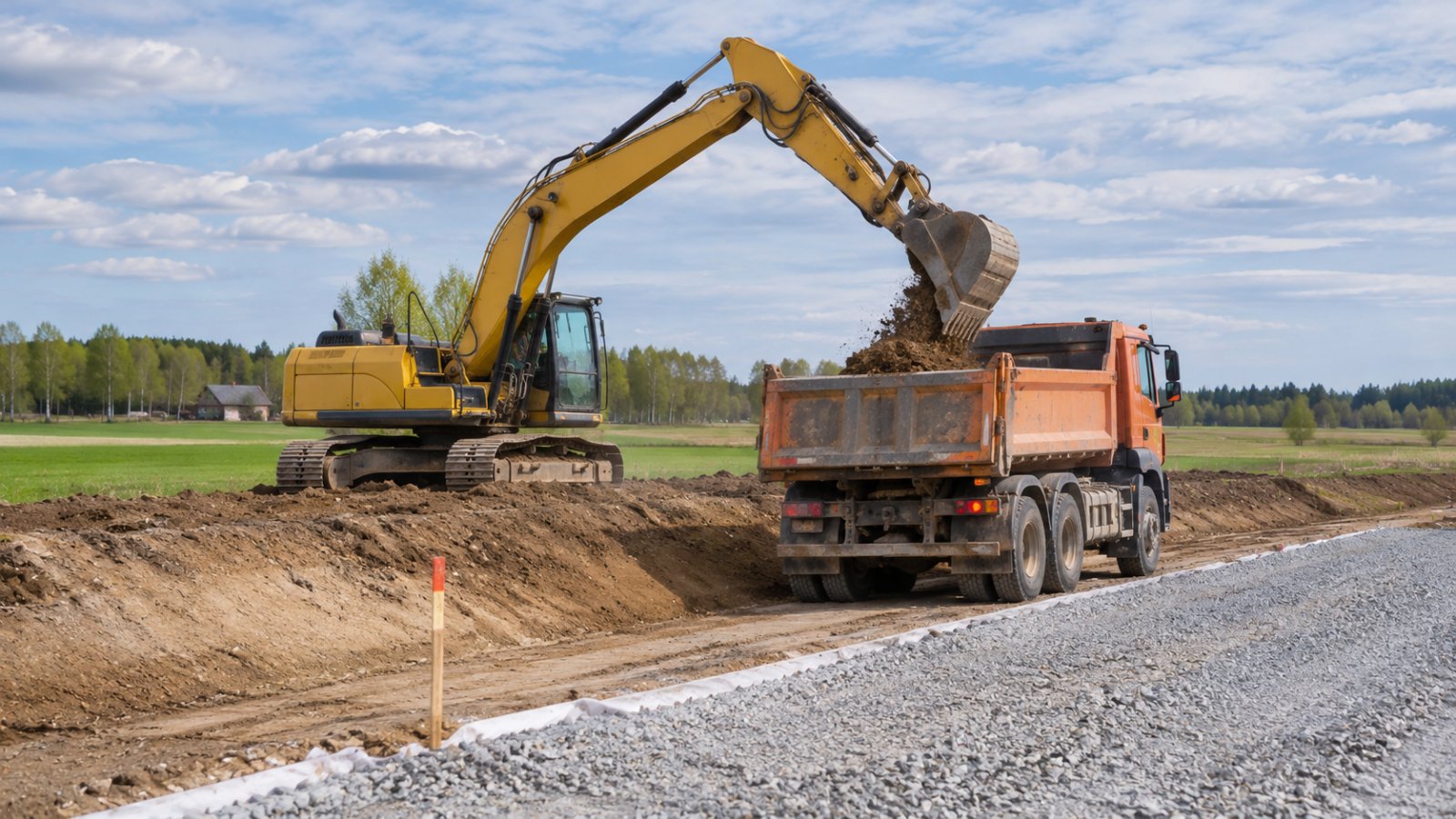
Earthworks are the first physical work on a road site. Topsoil and unsuitable soil are removed, cuts are dug and embankments are built up to the planned height.
Excavators, bulldozers and dump trucks move the material, and the soil is placed in layers and compacted. Drainage ditches and culverts are often built at this stage, because a dry foundation is important for a long-lasting road.
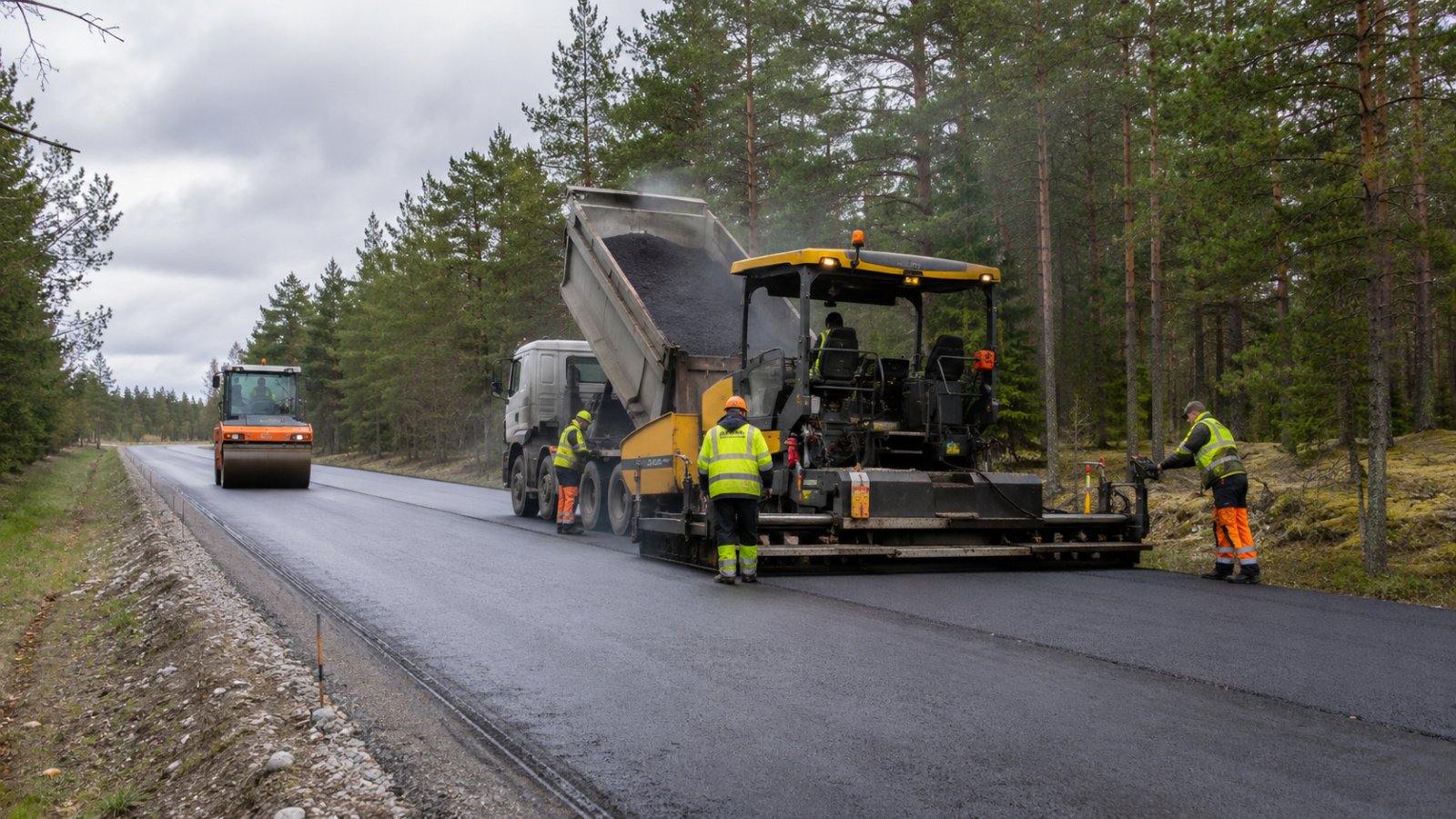
Asphalt is a mix of stone aggregate and bitumen, prepared hot at a mixing plant and delivered to the site by truck. A paver spreads the mix in an even layer across the width of the road.
Rollers follow the paver and compact the asphalt while it is still warm. A road often has two or more asphalt layers: a binder course below and a wearing course on top. Road markings are applied once the surface has cooled.

The order of work is similar on most projects, whether it is a new road, a reconstruction or a resurfacing.
The route, levels and layer structure are set out in the project documents, and the site is surveyed.
Traffic arrangements are put in place, and vegetation and old structures are cleared.
Soil is excavated or filled, and drainage is built.
Sand and crushed stone are spread, levelled and compacted.
Binder and wearing courses are laid with pavers and compacted with rollers.
Shoulders, markings and signs are completed, and the work is inspected.
Roads in Estonia go through frost, thaw and wet autumns every year. These conditions shape how roads are built.
A layer of frost-resistant material, usually sand, keeps water from collecting under the road and lifting the surface in winter.
Ditches, culverts and a correct cross-slope carry rainwater and meltwater away from the structure.
Asphalt is laid in dry weather and at suitable temperatures, which in Estonia usually means late spring to autumn.
Compaction, layer thickness and evenness are measured during the work and before the road is handed over.
The natural ground that the road structure is built on.
A raised section of soil built to lift the road above the surrounding ground.
A compacted layer of graded stone that spreads the load of traffic.
The lower asphalt layer that connects the base to the surface.
The top asphalt layer that vehicles drive on.
A pipe under the road that lets water pass from one side to the other.
LÄÄNE-EESTI TEEDEEHITUS OÜ · Registry code 14289410 · Registered 14.06.2017